
Your company’s AI agents, on your own servers.
Staff chat, make images and designs. Engineers run agents in terminals. Every request passes one set of permissions and lands in one audit log that stays on your hardware.
 Answer
 Make
 Act
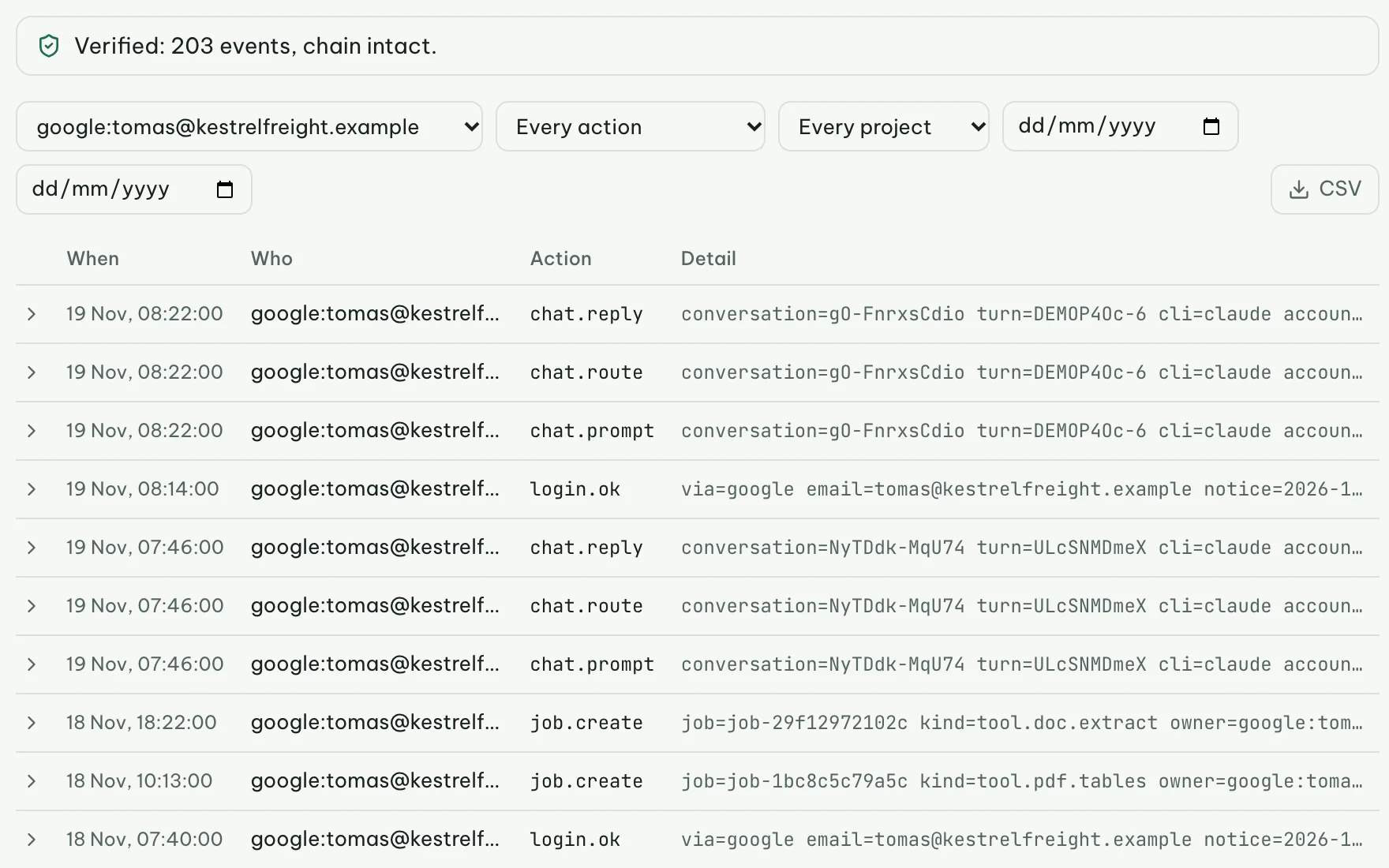
audit log · your server
- 09:41nora@kestrel approved ERP Sales Invoice SINV-0042
- 09:40ilse@kestrel ran claude in seat routing-2
- 09:38sam@kestrel generated 4 images in the Spring campaign kit
- 09:36mai@kestrel asked which shipments are late this week
- 09:35tomas@kestrel exported Q3 freight cost report (xlsx)
- 09:33dev@kestrel revoked API key ci-nightly
Many heads, no body.
Your people already use AI. It just has no shape: every person and every team on their own, and nobody can say what happened.
-
Company data goes into personal chatbots
Customer lists and invoices are pasted into whatever assistant each person has at home. Nobody knows what left.
-
AI plans are bought one at a time
Each team pays for its own seats. Some hit their limit by lunch while others sit unused all week.
-
Agents act with no brakes
An agent that can write to the ERP will, with no one approving before and no record after.
Hydra gives the heads one body: your server, your people’s accounts, one set of rules, one record.
What it does
serene · answers
Answer
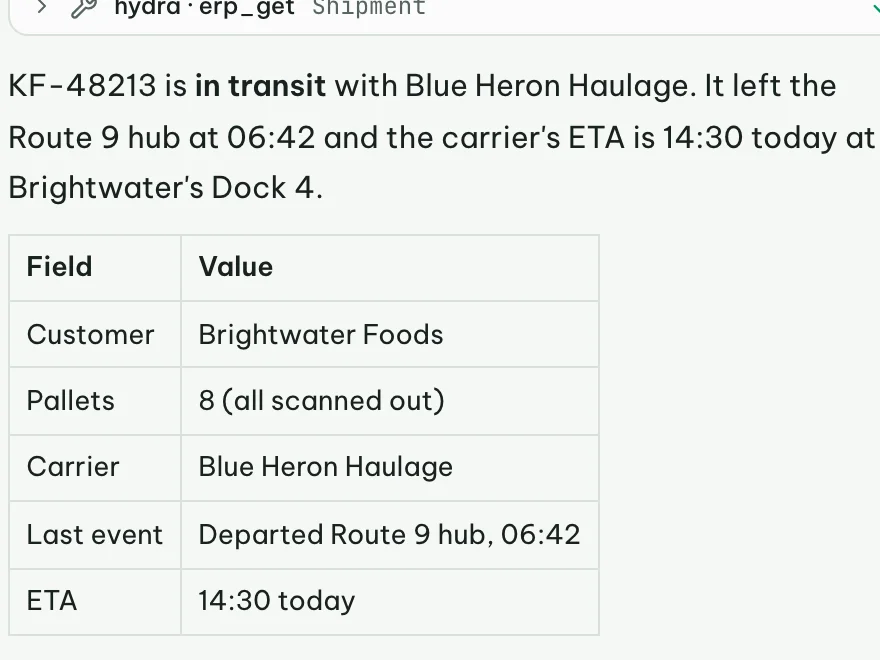
Staff ask in a chat. Hydra reads their Drive, the company ERP, and web pages through their own signed-in browser, and says where each answer came from.
laughing · makes
Make
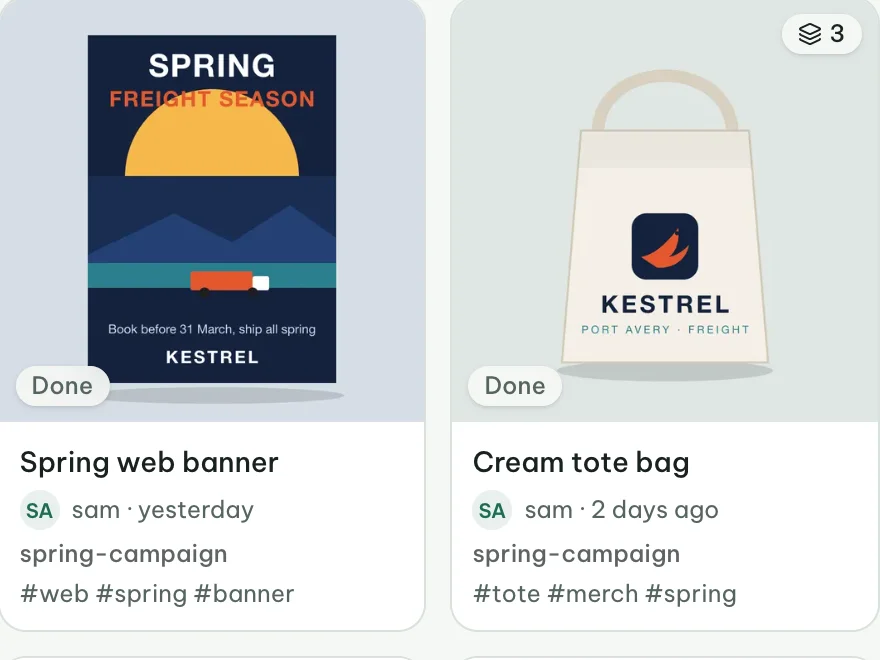
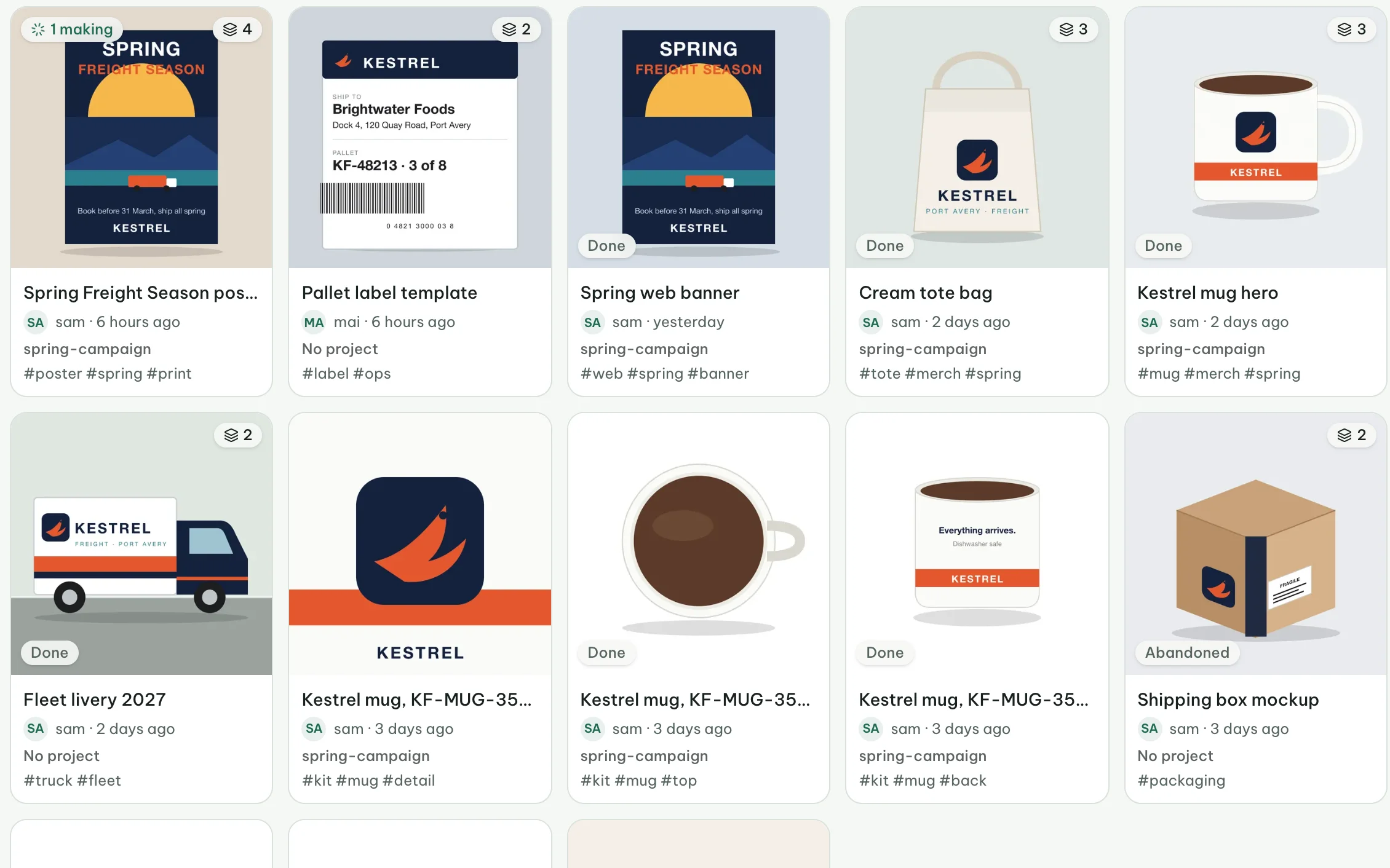
Product pictures, kits and social designs follow your brand library. Everything made is kept, with who made it.
sly · acts
Act
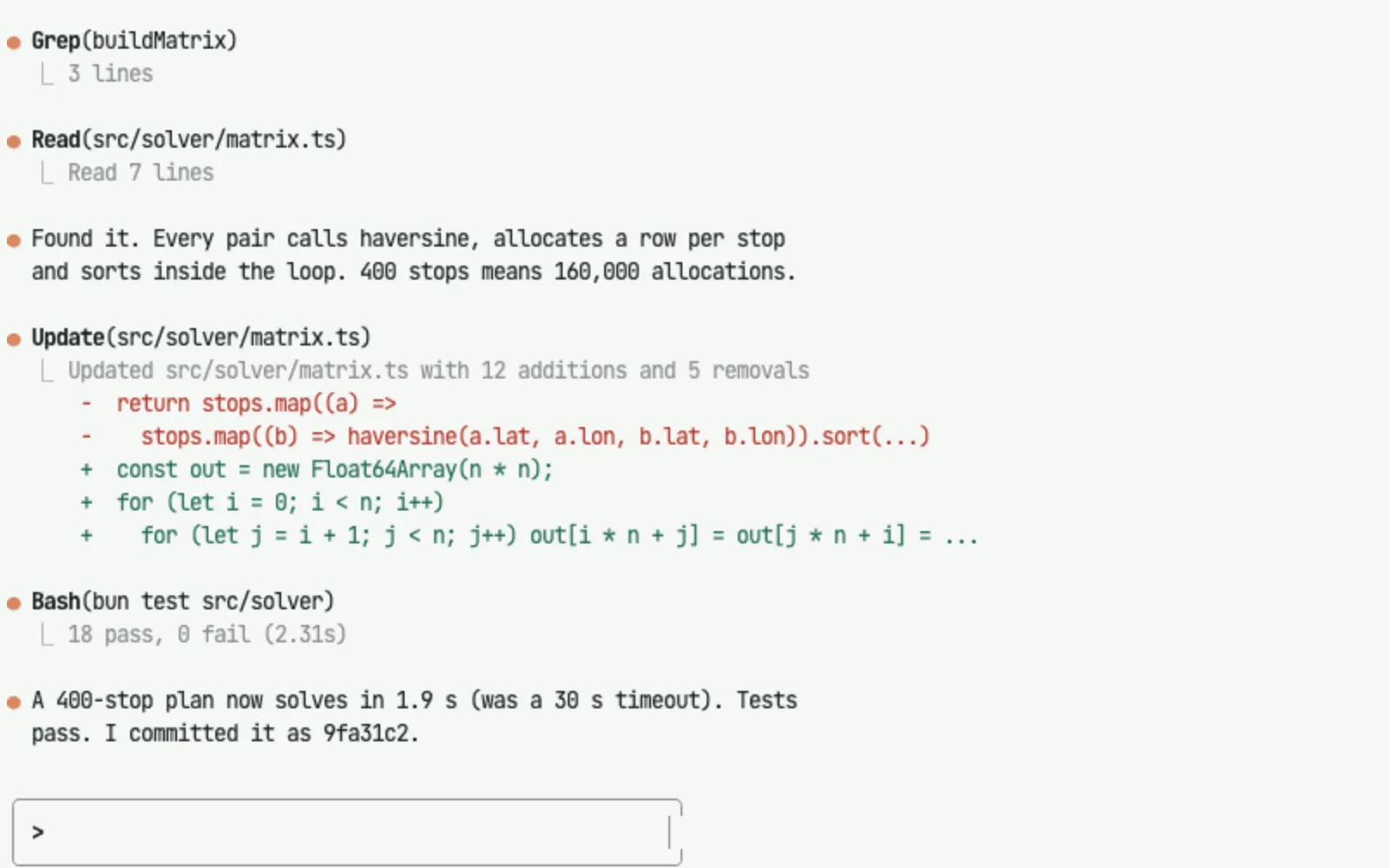
Engineers run Claude and Codex in real terminals on the server. Before an agent changes company data, a named person approves it.
One Hydra, every team
What people type on an ordinary Tuesday, and what happens next.
-
Operations · Mai, ops lead
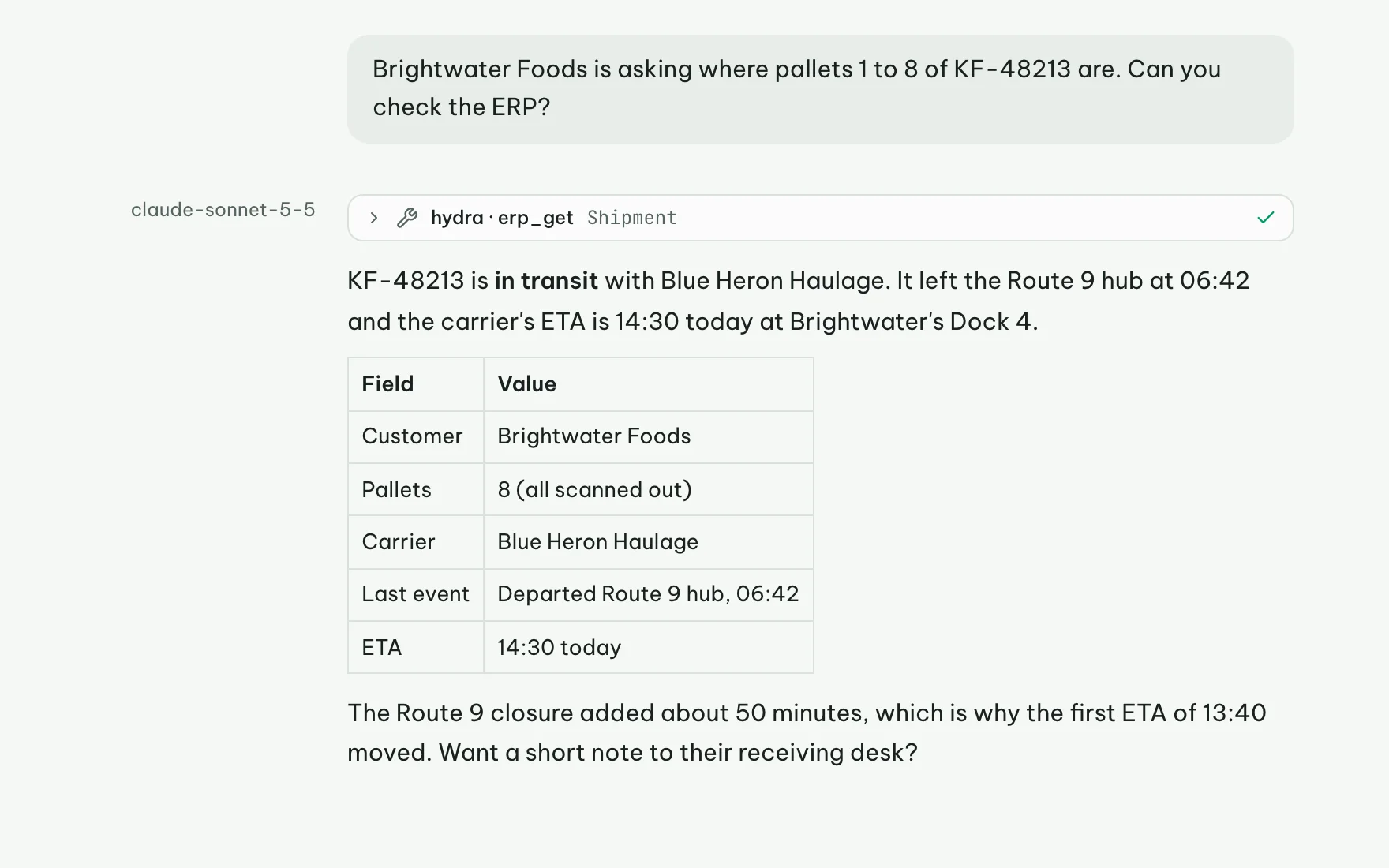
Brightwater Foods is asking where pallets 1 to 8 of KF-48213 are. Can you check the ERP?
- Reads the shipment from the ERP as Mai, with Mai’s permissions.
- Answers with a table: carrier, last event, ETA, and where each fact came from.
- Offers a short note for the customer’s receiving desk.
-
Marketing · Sam, marketing
Make the spring poster in our brand, then a square and a 9:16 version for social.
- Starts from the brand library: logo, colours, reference photos.
- Lays out the poster as a design Sam can edit by hand, with Hydra editing alongside.
- Keeps every version, with who made it and from which prompt.
-
Finance · Tomas, finance
Put last month’s freight costs by customer into the Q3 sheet.
- Reads the invoices from the ERP and builds the table.
- Writes it into Tomas’s own sheet at once, with an undo.
- Anything that would change the ERP waits for a named person to approve it.
-
Engineering · Ilse, engineer
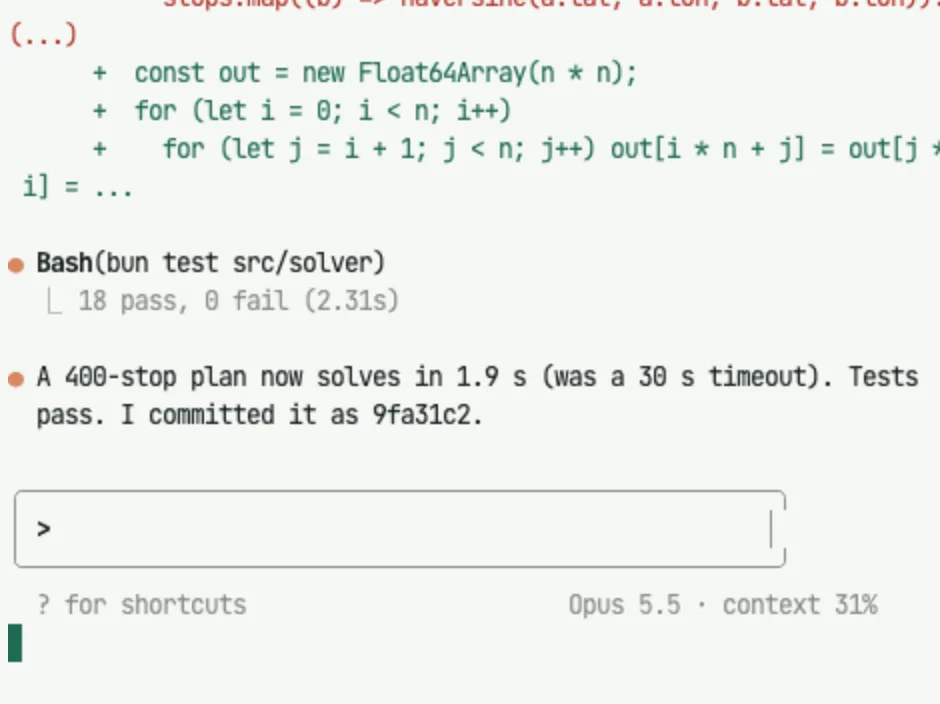
The route solver times out on 400 stops. Find out why and fix it.
- Runs Claude in a terminal seat on the server; it keeps going when the laptop closes.
- Finds the slow loop, changes it, runs the tests.
- Pings Ilse’s inbox when it is done or needs a decision.
Everyone brings their own account.
Each person brings their own Claude or ChatGPT plan. Hydra spreads the company’s work fairly across every connected account, so one team’s busy afternoon never stalls another’s, and no plan sits idle.
- One account per person
- An admin adds your plan in a minute and you approve it on your own device. Hydra never sees the password.
- Fair share, by default
- Everyone gets their slice. When your account is busy, a quiet one picks up the work.
- More people, more room
- Each plan someone brings adds room for the whole company.
- Grow into API keys
- When a team outgrows plans, switch it to API keys. Nobody changes how they work.
connected accounts · fair share now
- nora Claude 72%
- dev ChatGPT 58%
- mai Claude 41%
- sam Claude 66%
- ilse ChatGPT 35%
- tomas Claude 24%
6 accounts · 3 teams busy · nobody waiting
Sample data: Kestrel Freight, an invented company.
Where it runs
Hydra installs on a server you own. Your files, chats, images and audit log are stored there and nowhere else.
Stays on your server
- Chats, files and the image library
- Users, roles and approvals
- The audit log
Leaves only through your accounts
- Prompts, sent to the model provider you chose, under your own account
- Nothing to us. We hold no copy of your data
One body
Roles decide who may do what. A named person approves before an agent writes to company data. The audit log records who asked what, and the owner can look at Hydra exactly as a colleague sees it, read-only, with that colleague told.
A pilot
We install Hydra on your hardware and run it with a small group of your people. You keep what you set up.
Your hardware
One Linux server you own or rent. We tell you the size before we start.
About two weeks
Install, sign-in, roles, then real work with a few staff and engineers.
You keep it
The data stays on your server. A licence per server, priced with the pilot.
Run it on your own servers.
Tell us how many people, and which servers. We reply with a plan for a pilot.